
How to Overseed a Lawn in Central Minnesota
Have you ever looked at your lawn and wondered why it’s not as lush and green as your neighbor’s? The secret might be something called “lawn overseeding.” But what is it, and more importantly, does lawn overseeding work? Let’s dive in and find out!
Lawn overseeding is a process where you spread grass seeds over an existing lawn. It’s a fantastic way to fill in bare spots, improve the density of your lawn, and enhance your lawn’s color. According to the University of Minnesota Extension, overseeding can be a highly effective method for improving the overall health and appearance of your lawn, especially in our unique Minnesota climate. The best time for lawn overseeding in Minnesota is mid-August through mid-September. The second best time is in early spring.
So, how do you overseed a lawn? Here’s a step-by-step guide.
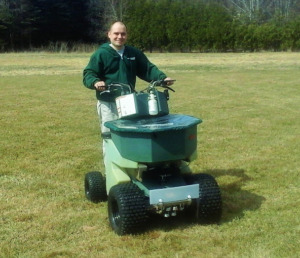
The Magic Process of Lawn Overseeding
1. Test The Soil
Before you start, it’s crucial to test your soil. The University of Minnesota Soil Testing Laboratory recommends soil testing as the first step in any lawn care process. It helps you understand what nutrients your soil has and what it’s missing.
Soil testing can identify the pH level and nutrient content of your soil, both of which can significantly impact the success of your overseeding efforts. For instance, grass seeds prefer slightly acidic soil with a pH between 6 and 7. If your soil is too acidic or too alkaline, the seeds may struggle to germinate and grow.
2. Choose the Right Seed
Next, you need to choose the right seed. Cool-season grasses like Kentucky bluegrass, perennial ryegrass, and fine fescues are typically recommended for Minnesota lawns.
Each grass type has its own unique benefits. Kentucky bluegrass, for instance, is known for its beautiful dark green color and ability to withstand cold winters. Perennial ryegrass germinates quickly, providing fast coverage and competition against weeds, while fine fescues are known for their shade tolerance.
3. Prepare Your Lawn
Before overseeding, mow your lawn shorter than usual and rake the lawn to remove any dead grass. This helps the new seeds make contact with the soil.
It’s also a good idea to aerate your lawn before overseeding. Aeration involves making small holes in the soil to allow air, water, and nutrients to penetrate the grass roots. This helps the roots grow deeply and produce a stronger, more vigorous lawn.
4. Spread the Seeds
Now it’s time to spread the seeds. You can use a broadcast spreader or do it by hand. Make sure to spread the seeds evenly. The University of Minnesota Extension recommends applying about 15 to 20 seeds per square inch. Too few seeds won’t provide the desired thickening effect, while too many seeds can result in overcrowding and competition for resources.
5. Water, Water, Water
After overseeding, water your lawn daily until the new grass is established. It’s typically recommended to keep the top 1 inch of soil moist. This might require watering multiple times a day if the weather is hot and dry. Remember, the goal is to keep the soil moist, not saturated. Overwatering can lead to seed runoff and disease.
6. Wait to Mow
Wait until the new grass is about 3 inches tall before mowing to avoid damaging the new sprouts. This usually takes about 3-4 weeks. When you mow, be sure to use a sharp blade to avoid tearing the young grass plants.
Results of Overseeding Lawns
Sounds simple, right? But remember, while overseeding can do wonders for your lawn, it’s not a one-and-done solution. Regular lawn care, including regular watering, proper fertilization, and pest control, is essential to maintaining a healthy, vibrant lawn.
That’s where we come in. At Valley Green Companies, we specialize in lawn care services including overseeding, aeration, fertilization, weed control, and pest control. We’re based right here in Sauk Rapids, and we serve all of Central Minnesota, about 20 miles around St. Cloud.
At Valley Green Companies, we use the right seed and strategies for Central Minnesota‘s Köppen climate classification of warm-summer humid continental (Dfb), and the United States Department of Agriculture’s plant hardiness zone of 4a and 4b.
Save Time On Your Lawn This Year
So, if you’re thinking, “I want to overseed my lawn, but I’m not sure where to start,” don’t sweat it! Give us a call at (320) 259-5959 or fill out our contact form. We’d be thrilled to help you get the lush, green lawn you’ve always wanted.
Lawn overseeding is a powerful tool in your lawn care arsenal. It can help improve the density and color of your lawn, and it’s particularly effective in our Minnesota climate. So why not give it a try? And remember, if you need a hand, Valley Green Companies is just a phone call away. Let’s make your lawn the envy of the neighborhood together!

 Image(s) licensed by Ingram Image & Stock Photo Secrets
 Image(s) licensed by Ingram Image & Stock Photo Secrets