
How to Reduce and Prevent Mosquitoes in Your Central Minnesota Yard
Reviewed by Michael Hornung, Owner of Valley Green Companies
Last updated: June 25, 2026
Mosquitoes can turn a beautiful Central Minnesota yard into a place your family avoids. They bite, swarm around patios and play areas, bother pets, and can carry diseases such as West Nile virus. The good news: you can make a real difference when you combine simple homeowner habits with professional mosquito control.
Valley Green Companies has helped Central Minnesota homeowners care for their lawns since 1990 and has provided professional mosquito control services since 2004. Our mosquito, flea, and tick program is designed for local yards, local weather, and the way mosquitoes behave in communities like St. Cloud, Sauk Rapids, Sartell, Waite Park, St. Joseph, Cold Spring, Clearwater, Rice, and St. Augusta.
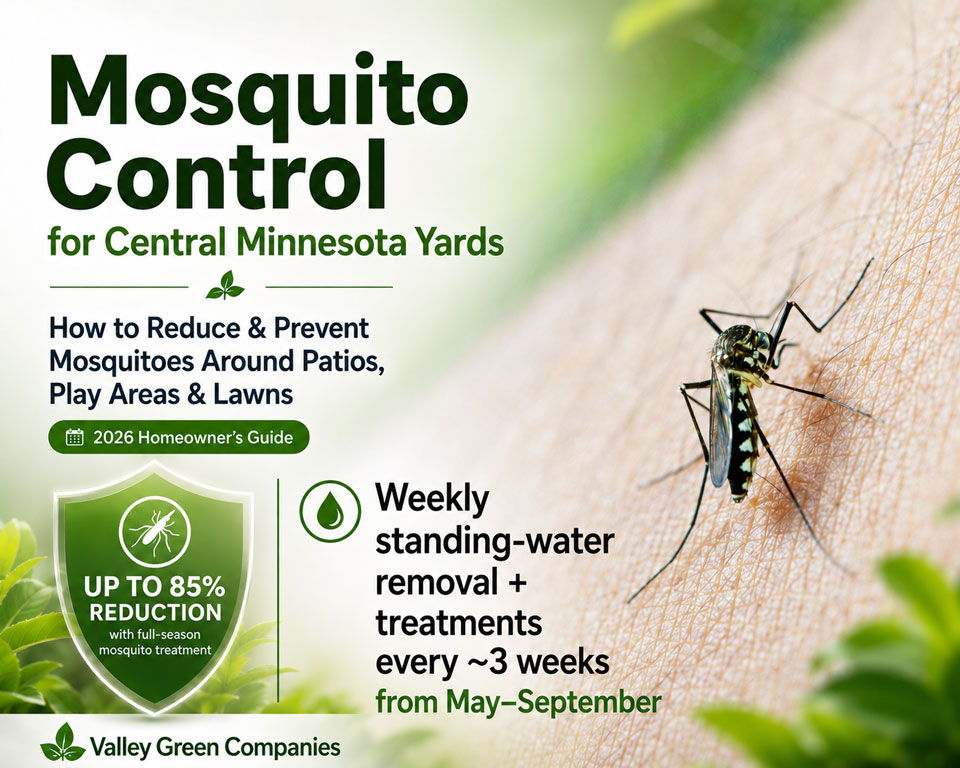
The best way to prevent mosquitoes in a Central Minnesota yard
The best mosquito prevention plan uses three layers:
- Remove standing water where mosquitoes breed.
- Reduce shady, damp resting areas around the yard.
- Use a consistent treatment program that targets the lawn, shrubs, trees, tall grass, and property edges.
DIY steps help, but they usually are not enough by themselves because mosquitoes can fly in from nearby properties, wooded edges, drainage areas, wetlands, ditches, and neighboring yards. A full-season mosquito control program gives you more consistent protection through the months when Central Minnesota families want to be outside most.
Quick answer: What works best?
For most Central Minnesota homeowners, the most effective mosquito control plan is a full-season barrier treatment program combined with weekly standing-water removal. Valley Green’s program treats the lawn, property borders, trees, shrubs, tall grasses, and other mosquito harboring areas approximately every three weeks from May through September. Typical results are about an 85% reduction in mosquito activity, with the strongest results coming from consistent service throughout the season.
15 ways to reduce mosquitoes in your yard
1. Empty standing water once a week
Mosquitoes need water to reproduce. Walk your property weekly and empty anything that can hold water, including:
- Buckets
- Flowerpot saucers
- Kids’ toys
- Wheelbarrows
- Tarps
- Birdbaths
- Pet bowls
- Trash can lids
- Tires
- Clogged gutters
- Low spots near downspouts
- Patio furniture covers
- Boats, trailers, and equipment stored outside
Even small amounts of water can become a breeding site.
2. Clean your gutters
Clogged gutters are one of the easiest mosquito problems to miss. Leaves and debris can trap water above your head, creating a hidden breeding area. Clean gutters regularly, especially after spring storms and heavy summer rain.
3. Refresh birdbath water often
Birdbaths are great for your yard, but stale water can attract mosquitoes. Empty, scrub, and refill birdbaths at least once per week. During peak mosquito season, more often is even better.
4. Fix drainage problems
Low, soggy areas in your lawn can become mosquito-friendly after rain. Check for:
- Puddles that last more than a day
- Downspouts dumping water near the foundation
- Poorly graded landscape beds
- Overwatered areas from sprinklers
- Leaky outdoor faucets
- Water around air conditioning units
If water collects repeatedly, improve drainage or adjust irrigation.
5. Keep grass trimmed
Tall grass gives mosquitoes a cool, shaded resting area during the day. Mowing consistently makes your yard less inviting and helps professional treatments reach the places where mosquitoes hide.
6. Trim shrubs and dense vegetation
Mosquitoes like shaded, humid places. Thin overgrown shrubs, trim vegetation near patios, and open up dense landscaping where air does not move well.
7. Remove yard clutter
Unused containers, toys, tires, equipment, and tarps can collect water. Store items upside down, under cover, or indoors when possible.
8. Treat ornamental ponds responsibly
If you have a pond or water feature, keep water moving with a pump or fountain. For standing water that cannot be emptied, ask a professional whether a mosquito larvicide is appropriate.
9. Use screens and repair gaps
Mosquito control is not only about the yard. Repair torn window and door screens, seal gaps, and keep doors closed so mosquitoes do not follow you indoors.
10. Use fans on patios and decks
Mosquitoes are weak fliers. Outdoor fans can make patios, decks, and seating areas less comfortable for them, especially during dinner, parties, and evening gatherings.
11. Coordinate with neighbors
Your yard may be clean, but mosquitoes can travel from nearby properties. If neighbors also remove standing water and manage overgrowth, the whole block benefits.
12. Protect pets from fleas and ticks too
In Central Minnesota, mosquitoes are not the only biting pest that affects outdoor comfort. Fleas and ticks can live in shaded areas, tall grass, and landscape edges. A combined mosquito, flea, and tick program helps protect the spaces where kids and pets spend time.
13. Start before mosquitoes peak
Do not wait until mosquitoes are already ruining the yard. In Minnesota, mosquito activity rises as temperatures warm and standing water becomes available. Starting service early helps reduce populations before they build.
Related guide: When to Start Mosquito Control in Minnesota
14. Choose a full-yard treatment instead of only the edges
Mosquitoes rest in trees, shrubs, tall grass, and shaded areas, but they also move across your lawn to reach people and pets. Valley Green treats the harboring areas and the entire lawn, not just the border. That gives better coverage when new mosquitoes fly in from surrounding areas.
Related guide: How Mosquito Control Services Work & Why They’re Effective
15. Use a full-season mosquito control program
One-time sprays can help for a party or event, but mosquitoes continue hatching all season. A full-season program gives more consistent control because treatments are repeated approximately every 21 days.
Mosquito prevention checklist for Central Minnesota homeowners
| Yard area | What to check | How often | Why it matters |
|---|---|---|---|
| Gutters | Leaves, debris, standing water | Monthly and after storms | Hidden breeding site |
| Birdbaths | Stale water | Weekly | Mosquitoes lay eggs near water |
| Buckets, toys, tarps | Water collection | Weekly | Small containers breed mosquitoes |
| Lawn | Tall grass, soggy areas | Weekly | Mosquitoes rest in cool, shaded areas |
| Shrubs and trees | Dense, humid growth | Monthly | Common daytime resting areas |
| Downspouts | Poor drainage | After heavy rain | Puddles can become breeding spots |
| Patios and decks | Biting activity | Every outdoor use | Helps identify problem zones |
| Pets’ outdoor areas | Fleas, ticks, shaded edges | Weekly | Protects pets and reduces pest pressure |
What is the best mosquito control option?
| Mosquito control method | Rating | Best for | Limitations |
|---|---|---|---|
| Weekly standing-water removal | ★★★★★ | Every homeowner | Helps breeding sites but does not stop mosquitoes flying in |
| Full-season professional barrier treatment | ★★★★★ | Consistent yard comfort | Requires scheduled applications |
| Full-lawn plus harboring-area treatment | ★★★★★ | Central Minnesota yards with trees, shrubs, and grass | Best when repeated through the season |
| One-time event treatment | ★★★★☆ | Weddings, grad parties, reunions, cookouts | Short-term support, not season-long control |
| Fans on patios and decks | ★★★★☆ | Small seating areas | Does not reduce yard-wide populations |
| Larvicide for water that cannot be drained | ★★★★☆ | Ponds, drainage areas, persistent water | Must be used correctly and only where appropriate |
| Bug spray on skin and clothing | ★★★☆☆ | Personal protection | Does not treat the yard |
| Citronella candles and torches | ★★☆☆☆ | Small patio areas | Limited coverage and short duration |
| Bug zappers | ★☆☆☆☆ | General flying insects | Not a reliable mosquito solution and may kill beneficial insects |
Why Valley Green is different
Valley Green’s mosquito control program is built for Central Minnesota properties. Many mosquito companies focus mostly on borders, trees, shrubs, and other resting areas. Valley Green treats those important mosquito harboring zones and the entire lawn for broader coverage.
That matters because mosquitoes do not respect property lines. They can fly in from neighboring yards, wetlands, ditches, wooded edges, and shaded areas. When they land in your lawn after treatment, they are more likely to contact the application.
Valley Green mosquito control trust signals
| What homeowners care about | Why Valley Green |
|---|---|
| Local experience | Serving Central Minnesota lawns since 1990 |
| Mosquito experience | Professional mosquito control since 2004 |
| Expected results | About 85% reduction in mosquito activity |
| Treatment approach | Lawn, borders, shrubs, trees, tall grass, and harboring areas |
| Schedule | Approximately every three weeks from May through September |
| Pest coverage | Mosquitoes, fleas, and ticks |
| Applicators | Trained professionals, not untrained seasonal help |
| Guarantee | 100% satisfaction guarantee with full-season program |
| Service options | Residential, commercial, cabin, and event treatments |
| Local office | 1325 Scenic Dr NW, Sauk Rapids, MN 56379 |
Mosquito control comparison: DIY vs. Valley Green
| Feature | DIY prevention | One-time spray | Valley Green full-season program |
|---|---|---|---|
| Removes breeding sites | ★★★★★ | ★★☆☆☆ | ★★★★★ when paired with homeowner cleanup |
| Reduces adult mosquitoes | ★★☆☆☆ | ★★★★☆ | ★★★★★ |
| Helps before parties | ★★☆☆☆ | ★★★★★ | ★★★★★ |
| Season-long comfort | ★★☆☆☆ | ★★☆☆☆ | ★★★★★ |
| Targets shrubs and trees | ★☆☆☆☆ | ★★★★☆ | ★★★★★ |
| Targets the full lawn | ★☆☆☆☆ | Varies | ★★★★★ |
| Helps with fleas and ticks | ★☆☆☆☆ | Varies | ★★★★★ |
| Best overall choice | Helpful support | Good for events | Best for most homeowners |
When should mosquito control start in Minnesota?
The best time to start mosquito control in Minnesota is before mosquito populations peak. In Central Minnesota, that usually means planning service in spring as temperatures rise, snowmelt ends, and standing water appears.
Starting early helps reduce the first waves of mosquitoes instead of waiting until the population is already high. Consistent treatments every three weeks help maintain results through the outdoor season.
Read more: When to Start Mosquito Control in Minnesota
How professional mosquito control works
Professional mosquito control targets where mosquitoes live, rest, and travel. Valley Green’s treatments focus on:
- Trees
- Shrubs
- Tall grasses
- Shaded edges
- Lawn areas
- Property borders
- Common mosquito harboring zones
The goal is to reduce mosquito activity across the yard, not just around one patio or one problem corner.
Read more: How Mosquito Control Services Work & Why They’re Effective
Local mosquito control in Central Minnesota
Valley Green provides mosquito, flea, and tick control for homeowners and businesses throughout the St. Cloud area and surrounding Central Minnesota communities, including:
If you live near these communities and mosquitoes are keeping you off your patio, deck, lawn, or lakeside property, Valley Green can help you choose the right mosquito control plan.
What customers say
“Usually, I’m the first to get bit by mosquitoes when I’m gardening. However, with your mosquito control, I no longer get bit. I also really like that I don’t need to spray bug repellent on my skin.”
– Kari, Sauk Rapids
You can also visit the Valley Green Reviews page to read more customer feedback and share your own experience.
Helpful mosquito resources
For homeowners who want to learn more about mosquito prevention and mosquito-borne illness, these trusted resources are helpful:
Related Valley Green guides
Want to learn more about protecting your yard this season?
- Which Is the Best Mosquito Control Company in Central Minnesota?
- When to Start Mosquito Control in Minnesota
- How Mosquito Control Services Work & Why They’re Effective
- Best Lawn Fertilization and Weed Control in Central Minnesota
- Which Is the Best Lawn Care Company in Central Minnesota?
- How Landscape Weed Control Services Keep Beds Looking Clean All Season
- Why Rock & Mulch Bed Weed Control Is Important for Landscape Health
Frequently asked questions about mosquito control in Central Minnesota
What is the fastest way to reduce mosquitoes in my yard?
The fastest way is to remove standing water and schedule professional mosquito control. Standing-water removal reduces breeding areas, while professional treatment targets adult mosquitoes resting in grass, shrubs, trees, and shaded areas.
Can I get rid of all mosquitoes permanently?
No mosquito control company can honestly promise to eliminate every mosquito forever. Mosquitoes can fly in from nearby properties, wooded areas, wetlands, ditches, and standing water. A strong program can significantly reduce mosquito activity and make your yard much more comfortable.
How much can Valley Green reduce mosquitoes?
Valley Green’s mosquito control program can reduce mosquito activity by about 85% in treated yards.
How often should my yard be treated?
For full-season coverage, Valley Green typically treats approximately every three weeks from May through September.
Do you treat the whole lawn?
Yes. Valley Green treats the lawn, property borders, and mosquito harboring areas such as trees, shrubs, and tall grass. This full-coverage approach helps when mosquitoes fly in and land throughout the yard.
Do mosquitoes live in grass?
Mosquitoes commonly rest in cool, shaded, humid areas such as tall grass, shrubs, trees, and landscape edges. Treating only one part of the property may leave gaps in coverage.
Is mosquito control worth it in Minnesota?
Yes, for many homeowners. Minnesota summers are short, and mosquitoes can make patios, decks, lawns, cabins, and outdoor events uncomfortable. A professional mosquito control program helps families spend more time outside with fewer bites.
Does mosquito control help with ticks and fleas?
Valley Green’s program targets mosquitoes, fleas, and ticks. That makes it a strong option for families with children, pets, wooded edges, shaded yards, cabins, or outdoor entertaining areas.
Can I schedule a one-time mosquito treatment for a party?
Yes. Valley Green provides one-time mosquito treatments for events such as weddings, graduation parties, birthdays, reunions, and company picnics. For best results, ask whether more than one treatment is recommended before your event.
Do I need to be home for mosquito treatment?
Usually, no. As long as the technician has access to the yard and pets are kept inside, treatment can often be completed while you are away.
How long should people and pets stay off the lawn after treatment?
Stay off the lawn until the application has dried. Valley Green typically recommends waiting about 30 minutes, depending on conditions.
What happens if it rains?
Mosquito treatments need time to dry. If rain, high wind, or unsafe weather conditions are expected, Valley Green may adjust the treatment schedule.
Are bug zappers good for mosquitoes?
Bug zappers are not the best mosquito control option. They may kill many flying insects, but they are not a complete solution for mosquito prevention and can affect beneficial insects.
Are bats and birds enough to control mosquitoes?
Bats, birds, fish, and other natural predators can help, but they usually are not enough to keep a yard comfortable by themselves. They are best viewed as part of a broader prevention plan.
What should I do every week during mosquito season?
Walk your property and empty standing water, clean birdbaths, check gutters, remove clutter, look for puddles, and keep grass trimmed. These simple habits support professional mosquito control and reduce breeding sites.
Final Recommendation
For the best mosquito control in a Central Minnesota yard, combine weekly standing-water removal with Valley Green’s full-season mosquito, flea, and tick control program. DIY prevention helps reduce breeding areas, but professional full-yard treatment gives stronger, more consistent protection through the months when your family wants to enjoy the lawn most.
Call Valley Green Companies at 320-259-5959 or contact Valley Green online to schedule mosquito control for your Central Minnesota home, cabin, business, or outdoor event.


